

Ever discovered a mysterious bump on your skin and immediately launched into a WebMD-fueled panic spiral?
Is it cancer? A rogue pimple? A tiny alien egg sent to hatch beneath your epidermis? Is your skin plotting your untimely downfall?
You’re not alone. I’ve had at least ten messages this month from people obsessing over pimples, pus, and every flavor of weird skin drama imaginable. Clearly, we’re all just one strange lump away from existential crisis.
The human body is a weird, lumpy, ever-morphing meat suit, and most of the bumps it grows are harmless—just another way your skin likes to keep you humble and Googling at 2 a.m.
But we get it—bumps are baffling. There’s a dizzying variety of spots, rashes, cysts, and unidentified dermal objects out there, and let’s be real: the search results rarely bring clarity. More often, they just bring terror.
Whether they’re painful, itchy, or just plain unsightly, these skin invaders love to mess with your peace of mind. So here it is—your no-shame, no-freakout guide to the many mysterious textures your body might decide to sprout.
From clogged pores to actual reasons to call a dermatologist, we’ve got you covered. (Pun very much intended.)
Behold: your go-to survival guide for the lumps, bumps, itches, and oozy bits that might crop up on your face—or anywhere else your skin feels like being dramatic.
Ready to meet your epidermal rogues’ gallery? Let’s dig in… figuratively. Please.
Ingrown Hairs

Ingrown hairs are those painful, red, and sometimes pus-filled bumps that show up after shaving, waxing or tweezing. They’re incredibly common in areas where the hair is coarse or curly, like the bikini line, underarms, legs and even the face.
So what actually causes them? When a hair is removed, it sometimes grows back into the skin instead of out. Your body reacts to this by triggering inflammation, which leads to that sore, pimple-like bump we all dread.
Most of the time, ingrown hairs are harmless, but they can become infected or lead to scarring if not treated properly.
How to Treat Ingrown Hairs
Although many ingrown hairs resolve on their own, there are a few simple things you can do to treat them and stop new ones from forming:
- Gently exfoliate the area with a mild scrub or exfoliating mitt. This helps remove dead skin cells and free trapped hairs.
- Apply a warm compress to the area for 10 to 15 minutes to soften the skin and ease discomfort.
- Avoid picking, scratching or squeezing the bump. This can lead to infection or permanent scarring.
- Moisturise regularly to keep skin soft and reduce the chance of hairs getting trapped.
- If the hair is visible just below the surface, you can use a sterilised needle or tweezers to gently lift it. Only do this if the hair is near the surface and the skin is not inflamed or infected.
When to See a Doctor
If the bump becomes very painful, swollen or starts to feel firm under the skin, it may have turned into an abscess. This can lead to further infection and illness. In this case, it’s important to see your doctor, who may need to drain the area and prescribe antibiotics.
You can check out: The Ordinary Salicylic Acid 2% Solution. It uses 2% salicylic acid to exfoliate inside the pore, helping to keep hair follicles clear and reduce the chances of post-shave bumps and ingrown hairs.
Apply it a few times a week after hair removal—once your skin has calmed down—to target problem areas like the bikini line, underarms, or anywhere else ingrowns like to throw tantrums.
Keratosis Pilaris

Ever noticed those tiny, rough bumps on your arms or thighs that feel a bit like sandpaper? You’re not alone! These little guys are called Keratosis Pilaris, or KP for short, and they’re super common, especially in cold or dry weather when skin tends to get dehydrated.
KP shows up as small, hard bumps that might look like pimples, but they’re actually just clogged hair follicles filled with keratin (a natural protein in your skin). Sometimes they look slightly red or white, and the skin around them may feel dry or bumpy.
- The backs of your arms
- Thighs
- Upper back
- Even underarms and cheeks
It’s totally harmless, non-contagious, and super common, some folks even call it “chicken skin” or “strawberry skin” because of the bumpy texture. The good news? It’s manageable with the right care!
How to treat Keratosis Pilaris
Good news: while there’s no magical cure, you can manage and reduce KP with regular exfoliation and hydration.
Home Remedy Hack
Try this easy scrub:
- Mix bicarbonate of soda (baking soda) with a little water to make a paste.
- Gently rub it on the affected area for about 30 seconds.
- Rinse off and pat dry.
It’s simple, budget-friendly, and works well with regular use!
Pro Tip: Use a Chemical Exfoliant
Physical scrubs are great, but sometimes your skin needs a little chemical help too. Enter one of our fave mum-approved solutions:
This cult-favourite toner helps dissolve dead skin cells and unclog those keratin-filled bumps without scrubbing. Use it a few times a week on dry, clean skin (you can apply it with a cotton pad or your hands, just be careful with sun exposure and always follow up with SPF!).
Nodules
Nodules are firm, round lumps that form beneath the skin and can vary in size, depth, and cause. Unlike surface-level bumps, nodules often develop in the deeper layers of tissue and can be mistaken for cysts, boils, or even swollen lymph nodes. They may be painless or tender to the touch, and can appear anywhere on the body.
There are several potential causes for nodules, including hormonal imbalances (such as those seen in acne nodules), injury, infections, autoimmune conditions, or nutritional deficiencies like low iron. Because of this wide range of causes, nodules can look deceptively similar while requiring very different treatments.
How to Treat Nodules
Treatment depends entirely on what’s causing the nodule. Some may resolve on their own, while others may require medication, drainage, or even surgical removal. The most important step is to see your doctor for an accurate diagnosis. They may perform a physical exam, blood tests, or imaging to determine the nature of the lump and guide you to the appropriate care.
Bottom line: if you find a lump that sticks around, grows, or causes discomfort—don’t ignore it. Get it checked out. Peace of mind is worth the appointment.
Calcium Deposits

Calcium Deposits are the build-up of calcium that comes up to the top of the skin in a white, yellow or pimple like bump. It is caused when abnormal amounts of calcium phosphate are deposited into the body’s soft tissue. The bumps can appear in different sizes and are often mistaken for stubborn pimples as when squeezed, the bumps can omit a chalky white substance. However, even on popping these deposits, the bump will not go away.
How to Treat Calcium Deposits
These need to be seen by a dermatologist as they need to be professionally removed. They are usually removed via a heated needle and take a few weeks to heal.
Cellulite

Cellulite is a perfectly normal and natural phenomenon that 80–90% of women carry—usually on their thighs, hips, and bottoms. It’s not a flaw or a failure; it’s just fat doing its thing under the skin, structured a bit differently thanks to collagen patterns and hormones. Cellulite is more common in women than men because of higher fat concentrations in those areas and the way connective tissue is arranged (thanks, biology).
While you can reduce the appearance of cellulite through healthy eating, staying hydrated, and regular dry-brushing, let’s be clear: there’s no magic cream or single workout that will erase it overnight.
Treatments like body scrubs, caffeine creams, massage tools, and even professional options like radiofrequency therapy may offer temporary smoothing, but consistency is key—and even then, results vary wildly.
The most effective “treatment” may honestly be, exercising to tone your body AND adjusting your expectations; accepting that your body is doing exactly what it was designed to do. Still, if you enjoy the ritual of exercising and dry-brushing or slathering on a firming cream, go for it—it’s your skin, your vibe. Just don’t let anyone convince you that cellulite is something to be ashamed of. You’re not a filtered Instagram ad. You’re a human person.
Acne
Mild acne is a fact of life for many people—especially during hormone-fueled seasons like puberty, stress, or “why did I eat that entire pizza” weekends. But if your acne starts to become very inflamed, painful, or persistent, it’s a sign you should check in with your GP. Acne might seem like a surface-level issue, but it can seriously impact confidence and quality of life, and there’s no need to just suffer through it.
How to Treat Acne

There are plenty of effective treatments available—from topical creams and prescription gels to oral medications and lifestyle changes—and your doctor can help tailor a plan that works for your skin.
The truth is, acne often needs proper medical intervention, not just whatever was trending on TikTok last week. Getting help isn’t overreacting—it’s taking your skin seriously.
What worked for me: The Ordinary Salicylic Acid 2% Solution was a game-changer. It helped calm down my breakouts and keep my pores clear without turning my face into a peeling mess. It’s simple, affordable, and actually does something—which, let’s be honest, is rare in skincare.
The Ordinary is a globally trusted brand with a massive cult following, thanks to its affordable, no-nonsense formulas that actually do what they say. Word of mouth alone has made it a go-to for skincare lovers and casual users alike.
Read More: How To Deal With Adult Acne
Blackheads

Blackheads are small, dark bumps that appear on the skin when hair follicles become clogged with oil and dead skin cells. They’re considered a mild form of acne and tend to pop up in areas where your skin is naturally more oily—especially the nose, chin, and forehead. What makes them “black” isn’t dirt—it’s oxidation. When the clogged pore is open to the air, the material inside reacts with oxygen and darkens.
They’re incredibly common and completely normal, but yes—they can be frustrating.
How to Treat Blackheads
There are two main routes that actually work:
- Chemical Exfoliation: Products containing alpha hydroxy acids (AHAs) or beta hydroxy acids (BHAs) are very effective for managing blackheads. AHAs like glycolic acid help exfoliate the surface of the skin, while BHAs (like salicylic acid) penetrate deeper into the pore to clear out buildup. Consistent use can really help reduce their appearance and prevent more from forming.
- Professional Extraction: If you’re dealing with stubborn or widespread blackheads, seeing a qualified skincare professional is a good move. They can safely extract clogged pores during a facial without damaging the skin—much better than going at it with your fingers in front of a bathroom mirror.
What worked for me: The Ordinary Glycolic Acid 7% Toning Solution helped improve the texture of my skin and reduce blackheads, especially around the nose. It’s affordable, easy to use a few nights a week, and a great option if you’re just starting with chemical exfoliants.
Melanoma
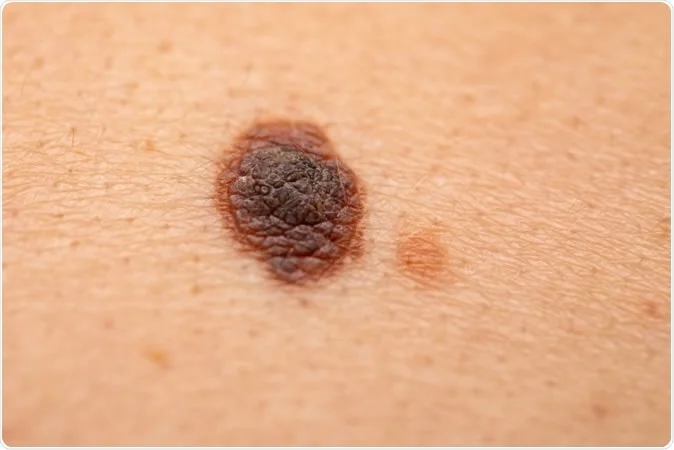
Melanoma is a very serious form of skin cancer and demands urgent medical attention. Melanoma usually (but not always) appears on the skin that is most exposed to sunlight. In Australia, Melanoma is the third most common type of cancer.
If you have a mole that suddenly darkens, changes colours, grows quickly or has an irregular shape, get this checked immediately.
Milia

Milia are small, white bumps that commonly appear on the face—especially around the eyes, cheeks, and nose. They’re tiny cysts that form when dead skin cells (keratin) get trapped beneath the surface instead of naturally shedding. The result?
A smooth, pearly bump that looks a bit like a whitehead but won’t respond to squeezing (please don’t try).
They’re completely harmless and often pop up without any warning. Milia are especially common in newborns—where they’re often called “milk spots”—and tend to clear on their own. In adults, they can be a little more persistent.
How to Treat Milia
- In babies: No treatment is needed. Milia in infants almost always resolves on its own within a few weeks to months. Just gentle cleansing—no picking, no harsh creams.
- In adults: Milia tends to stick around unless treated. A dermatologist can remove them with a fine needle (called lancing), a minor in-office procedure that’s quick and low-risk. Other options include laser treatment or topical retinoids that help exfoliate the skin and encourage turnover over time.
What worked for me:Regular exfoliation with The Ordinary Lactic Acid 10% + HA 2% 30mL helped reduce the appearance of milia and prevent new ones from forming. This formula gently encourages cell turnover and smooths the skin’s texture, making it especially helpful for areas prone to congestion.
I used it a few nights a week as part of my evening routine, and over time, it noticeably improved the clarity and softness of my skin—without any irritation.
Psoriasis
This appears as scaly skin, which is usually red, flaky and itchy. It is caused by the over-production of skin cells by an inflammatory response from white blood cells, it can occur in people with heart disease and diabetes. Climate can also be an affecting factor. it is found on knees, elbows, hairlines and necks. Psoriasis can be a symptom of an immune disorder.
How Psoriasis can be treated
Psoriasis is something that needs to be addressed by a doctor. Usually, medical intervention involved topical ointments, light therapies, and medication.

Dermatitis or Eczema
Dermatitis—also commonly referred to as eczema—is a broad term for inflammation of the skin that shows up in the form of redness, itching, sensitivity, flaking, or even blistering.
It comes in many forms (atopic, contact, seborrheic, etc.), and while some cases are linked to allergies or irritants, others seem to appear out of thin air for no clear reason at all. It’s especially common in people who wash their hands frequently or work with water, soap, or harsh chemicals—basically, anyone whose skin is in a constant state of “help me.”
How Dermatitis Can Be Treated

There’s no magical cure for dermatitis, but it can be effectively managed with the right skincare, medication, and lifestyle adjustments. Topical corticosteroids are often prescribed for flare-ups, while barrier creams and fragrance-free moisturisers can help reduce irritation and prevent further damage. The first step is visiting your doctor to rule out allergies or underlying conditions—they’ll be able to recommend the best treatment based on the type and severity of your symptoms.
What worked for me: Ego QV Intensive Moisturising Cleanser 1kg and QV Intensive Body Moisturiser were lifesavers. They’re both soap-free, fragrance-free, and specifically designed for very dry or eczema-prone skin. Great for daily use, especially when your skin feels like it’s plotting a rebellion. Keeping your skin calm and protected really is half the battle.
Boils
A boil is a very painful pus-filled bump that is caused by an infection under the skin or through a hair follicle. Boils appear as round reddish, whiteish, protruding lumps and can be found anywhere on the body. They occur when bacteria gets under the skin, the body then produces pus in response which collects under the skin.
How Boils Can be Treated
Most boils will resolve themselves. Applying warm compresses can help with the pain. If the boil becomes unusually large or painful, see a doctor who can lance the boil and/or prescribe antibiotic treatment.
Razor Rash or Razor Burn

Razor rash bumps—also known as razor burn—are those red, itchy, stingy little reminders that your skin didn’t enjoy that shave as much as you hoped. They’re most common on areas like the jawline, cheeks, legs, underarms, and bikini line—basically, anywhere hair meets blade without enough prep.
These bumps are usually caused by shaving with a dull razor, skipping shaving cream, or dragging the blade across dry, unsoftened skin. Going against the grain (literally) doesn’t help either.
How to Treat Razor Rash Bumps
Start by preventing them: always use a sharp razor, shave after a warm shower, and apply a proper shaving cream or gel. No shaving cream on hand? Conditioner makes a surprisingly decent backup. Be gentle, and resist the urge to go over the same area multiple times.
If the rash has already shown up, a warm compress can help calm irritation. Keep the area moisturised with a soothing, alcohol-free aftershave balm. Razor bumps typically go away on their own, but if they become painful, swollen, or pus-filled, it’s time to see a doctor.
What worked for me: NIVEA Men Sensitive Post Shave Balm is a great go-to. It’s alcohol-free, loaded with chamomile and vitamin E, and helps calm down redness, dryness, and itching after shaving. It’s technically marketed at men, but skin doesn’t know that—use it wherever you shave and your skin gets cranky.
There you go—comfort in a bottle for the battle-scarred.
Cold Sores
Cold sores are small, fluid-filled blisters that typically appear around the lips or mouth. They’re caused by the herpes simplex virus (usually HSV-1) and are incredibly contagious—especially through close contact like kissing or sharing drinks, utensils, or lip balm.
It’s estimated that up to 90% of people carry the herpes simplex virus, but not everyone will experience visible outbreaks. For those who do, cold sores can reappear multiple times throughout life, usually when the immune system is weakened by stress, illness, fatigue, or sun exposure.
How to Treat Cold Sores
While there’s no cure for the herpes virus, cold sore flare-ups can be managed effectively. At the first sign of tingling or a bump, start treatment right away to reduce severity and duration.
- Avoid direct contact: Refrain from kissing or sharing items like glasses or towels during an active outbreak to prevent spreading the virus to others—or to other areas of your own body.
- Watch for complications: If cold sores spread, last longer than 10 days, or become very painful, it’s best to see your doctor.
What worked for me: Zovirax Cold Sore Cream is a reliable over-the-counter option. It contains aciclovir, an antiviral that helps speed up healing when used at the first sign of symptoms. Other effective treatments include Compeed Cold Sore Patches for discreet coverage and faster recovery, and Virasolve Triple Action Cold Sore Cream for a mix of antiviral, antibacterial, and anesthetic relief.
Scabies
Scabies is red, itchy blister-like bumps caused by mites which cause a skin infection. The mites lay eggs under your skin and spread when hatched. Scabies is spread through prolonged physical and sexual contact, it can also be spread through bed linen and material surfaces. It is usually found all over the body but can be very common around the wrist area. Scabies are highly contagious often go through schools or nursing homes at alarming rates.
How Scabies Can be Treated
See your Doctor for the medicated cream to kill scabies.
Warts

Warts are small, rough skin growths caused by a viral infection—specifically, the human papillomavirus (HPV). They often appear as raised, round lumps and can develop anywhere on the body, though they’re most common on the hands, fingers, knees, and feet. While warts are usually harmless, they can be annoying, contagious, and occasionally painful—especially when they show up on pressure points like the soles of your feet (called plantar warts). Those can feel like stepping on a tiny cactus every time you walk.
Most warts go away on their own over time, but they can take months or even years to disappear. And let’s be honest—most of us don’t have the patience for that.
How to Treat Warts
There are plenty of effective over-the-counter treatments available, including salicylic acid patches, gels, and home-freezing kits that work by destroying the wart tissue layer by layer. These can be especially effective with consistent use over several weeks.
For faster results—or if the wart is painful, persistent, or spreading—a doctor can freeze it off using cryotherapy. It’s quick, relatively painless, and often more effective than DIY options.
What worked for me: Wart-Off Freeze Spray is a solid at-home option that mimics the freezing treatment you’d get at the doctor. It’s easy to use, mess-free, and worked well on smaller warts when used consistently. Just follow the instructions and try not to lose your nerve halfway through.
School Sores (Impetigo)

School sores, also known as impetigo, are a highly contagious skin infection that’s especially common in children. They’re caused by Staphylococcus or Streptococcus bacteria that enter the skin through minor cuts, insect bites, or even just from scratching. The infection shows up as red sores or blisters that weep fluid or become crusty and golden—most often around the nose and mouth, but they can appear anywhere.
Because of how easily impetigo spreads (through direct contact, towels, clothing, or even shared toys), it’s important to catch it early and treat it promptly.
How to Treat School Sores
You’ll need to see a doctor for proper treatment—impetigo won’t clear up on its own. Most cases are treated with a course of antibiotics, either oral or topical depending on severity. Your doctor may prescribe an antibiotic cream like Bactroban (mupirocin) to apply directly to the affected areas.
Until the sores have healed completely, it’s important to keep children home from school or daycare to prevent spreading the infection to others. Keep the sores clean, avoid touching them, and wash hands frequently.
What worked for me: Dettol Antiseptic Wound Wash Spray 100mL is a great option for gently cleaning school sores before applying antibiotic cream. It’s designed to flush out bacteria and debris from minor skin infections, without the sting that comes from harsher antiseptics. I used it to cleanse the affected area before applying prescribed Bactroban, and it helped keep the skin clean and reduce the risk of spreading.
Cellulitis

Cellulitis is a serious bacterial skin infection typically caused by Staphylococcus or Streptococcus bacteria. It occurs when bacteria enter the skin through a cut, scratch, insect bite, or any break in the skin’s barrier. The infection presents as red, swollen, warm, and tender skin—often accompanied by pain. It can spread quickly and, if left untreated, may lead to abscesses, ulceration, or even more serious complications like sepsis.
The most common areas affected are the legs, arms, and face, but it can appear anywhere the skin has been compromised. In some cases, people may also experience fever, chills, or swollen lymph nodes.
How to Treat Cellulitis
Cellulitis is a medical emergency. If you suspect you or someone else has it, see a doctor immediately. Early intervention is critical. Treatment typically involves a strong course of oral or intravenous antibiotics, depending on the severity.
In more serious cases, hospitalization may be required to manage the infection and prevent it from spreading into the bloodstream or deeper tissues.
Do not try to treat cellulitis with over-the-counter products alone—this is not a “wait and see” situation. The faster it’s treated, the better the outcome.
Lipomas

These bumps are harmless hunks of fat deposited under the skin, they can be found all over the body. The causes for these aren’t really known. They appear as large, round, bulging lumps under the skin. If you have ever watched an episode of Doctor Pimple Popper, you can see some really MASSIVE Lipomas that resemble raw chicken flesh when they are removed. Gross but so satisfying!
How to treat Lipomas
Treatment usually isn’t necessary however if they become painful or bothering they can be surgically removed. You will need to see a Dermatologist
Seborrheic Keratosis (or Scaly Moles)

These are wart-like bumps, that have skin lesions developed over time. this is caused by elderly age, sun exposure and can also be generic. They are one of the most common non-cancerous growths on people over 40. they are common on the face, chest, shoulders and back and have a waxy type appearance. They can also be known as ‘Scalies’.
How to Treat Seborrheic Keratosis
As they can be dark in colour, it is always best to have a Doctor rule out melanoma and make sure the growth is indeed a seborrheic keratosis. Once diagnosed, they are harmless but can be frozen off.
Cherry Angioma

Cherry Angiomas are common skin growth that can appear on any part of the body. They are often found in older people aged 30 and above. Pregnancy seems to increase the incidence of bright red lumps. They are made up of a collection of capillaries that form a ‘dome’ or round spot that is cherry in colour. They often bleed profusely if they are knocked or picked.
How to Treat Cherry Angioma
Cherry Angiomas are not dangerous and do not warrant treatment. However,if they are to be removed for comedic reasons, a dermatologist will need to be consulted. They are usually treated with laser or IPL.
Sebaceous Cyst

A sebaceous cyst is a harmless slow growing cyst under the skin. It is usually found on the shoulder, neck or face and is caused by injury to the skin or blocked glands.
How to Treat a Sebaceous Cyst
If the cyst isn’t bothering you, then it doesn’t require treatment. However, if it becomes big, painful or infected, your doctor can lance the cyst.
Actinic Keratosis (Age Spots)

Actinic keratoses are rough, scaly patches or flat lesions that appear on sun-damaged skin, usually in older adults with fair complexions. While they may resemble age spots, actinic keratoses are actually considered precancerous—caused by long-term exposure to ultraviolet (UV) light. They often appear on areas like the face, ears, neck, scalp, and backs of the hands—basically anywhere the sun has had an open invitation for decades.
These spots may be tan, brown, pink, grey, or even skin-toned, and can feel dry or gritty to the touch. Though they may seem harmless, they shouldn’t be ignored.
How to Treat Actinic Keratosis
Unlike simple age spots (which are benign and purely cosmetic), actinic keratoses should be assessed by a doctor or dermatologist. Left untreated, a small percentage can develop into squamous cell carcinoma, a type of skin cancer.
If you suspect a spot might be actinic keratosis—especially if it’s rough, scaly, persistent, or changing—book an appointment with your doctor or dermatologist. They’ll confirm the diagnosis and determine the best treatment approach. Options may include:
- Cryotherapy (freezing) – A quick in-office treatment where the lesion is frozen with liquid nitrogen and allowed to peel off over time.
- Topical prescription creams – These help destroy abnormal cells and are often used when multiple lesions are present.
- Photodynamic therapy or laser – These are more advanced options for widespread or resistant lesions.
While professional treatment is essential for actinic keratosis, sun protection and skin maintenance are just as important for prevention and follow-up care.
Helpful Products for Pigmentation Support and Prevention
While not a cure for AK, these can help manage sun-induced pigmentation and keep your skin in better shape overall:
- La Roche-Posay Mela B3 Niacinamide Dark Spot Serum – A high-performance serum that targets uneven tone and persistent dark spots with niacinamide and patented Melasyl™.
- L’Oréal Paris Bright Reveal Niacinamide Dark Spot Serum – Formulated to reduce the look of sun and age spots while gently exfoliating the skin.
- Olay Luminous Niacinamide + Vitamin C Super Serum – Brightens dull skin and fades hyperpigmentation while boosting hydration.
And most importantly:
- Nivea Sun Moisturising Sunscreen Lotion SPF 50+ – Daily sun protection is non-negotiable. This one hydrates while offering broad-spectrum UV protection to help prevent future damage.
Once you’ve had actinic keratosis, your skin is at higher risk of more lesions in the future. Make sunscreen part of your everyday routine—rain or shine—and check your skin regularly for changes. Prevention is everything.
So these are the most common lumps and bumps that appear on your skin. Of course it isn’t an exhaustive list – but if you have a dodgy lump or bump, make sure you get it checked out!
If you become concerned about any symptoms please seek immediate medical attention we have some hotlines and suggested websites for further information and advice: Click here.
SAHM takes no responsibility for any illness, injury or death caused by misuse of this information. All information provided is correct at time of publication.



Have your say!