
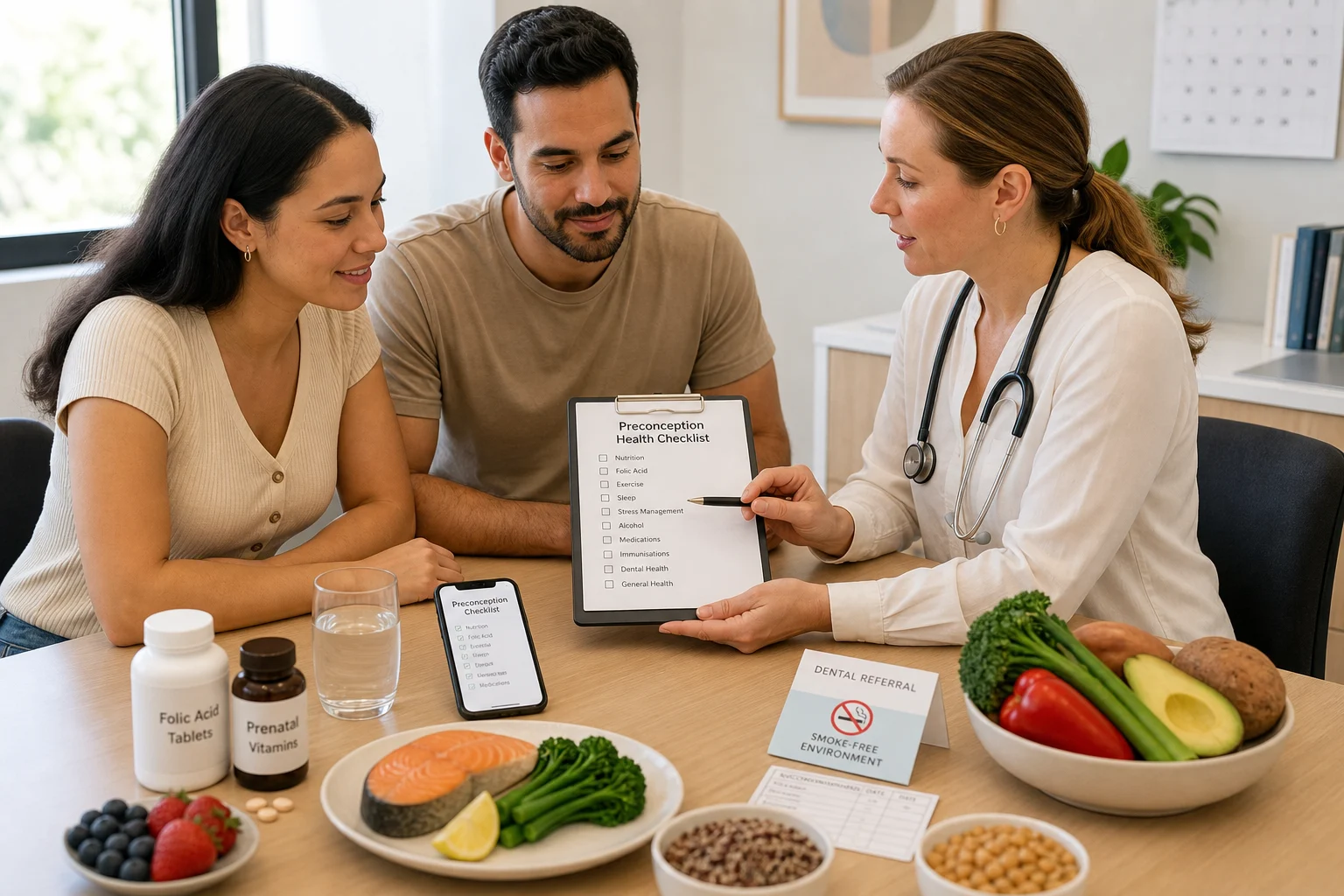
Thinking about trying for a baby? You don’t need to transform your entire life before stopping contraception. A few practical checks can reduce avoidable risks and help you begin pregnancy with the right medical support.
Start by booking a pre-pregnancy appointment with your GP. Review your medicines, vaccinations, and health conditions, start the recommended supplements, and make any lifestyle changes before pregnancy is possible.
This checklist provides general Australian guidance. Your GP, pharmacist, or fertility specialist can tailor it to your health, family history, and method of conception.
Your quick pre-pregnancy checklist
Before trying to conceive:
- Book a pre-pregnancy appointment with your GP.
- Start taking folic acid and discuss iodine with your doctor.
- Review every medicine and supplement you use.
- Check your vaccination history.
- Stop drinking alcohol.
- Get support to stop smoking, vaping, or using recreational drugs.
- Keep caffeine to no more than 200 mg a day.
- Review any existing physical or mental health conditions.
- Check whether cervical screening, dental care, or STI testing is due.
- Consider genetic carrier screening.
- Eat a balanced diet and follow Australian fish and food-safety guidance.
- Discuss when and how to stop contraception.
- Learn when to seek fertility advice.
Book a pre-pregnancy appointment
Pregnancy, Birth and Baby recommends seeing your doctor for a preconception consultation when you start planning a pregnancy.
Your doctor may discuss:
- your medical and pregnancy history
- your partner’s health, if applicable
- prescription and over-the-counter medicines
- vitamins, herbal products, and other supplements
- vaccinations
- mental health
- family medical history
- previous pregnancy complications
- smoking, vaping, alcohol, and other drugs
- cervical screening and STI testing
- your work and possible exposure to chemicals or other hazards
You may need blood tests or changes to an existing treatment plan. Don’t stop prescribed medicine without speaking to your doctor. Suddenly stopping some medicines can be more dangerous than continuing them.
Start folic acid before trying
Most people planning a pregnancy are advised to take 400 micrograms of folic acid every day. Australian guidance recommends starting 12 weeks before trying to conceive and continuing until you are more than 12 weeks pregnant.
Folic acid reduces the risk of neural tube defects, including spina bifida. These conditions can develop during the first weeks of pregnancy, sometimes before you know you are pregnant.
Your doctor may recommend a higher dose if you:
- take certain anti-epilepsy medicines
- have diabetes
- are living with overweight or obesity
- have previously had a pregnancy affected by a neural tube defect
- have a family history of neural tube defects
- have a condition that affects nutrient absorption
Don’t increase the dose without medical advice.
Ask about iodine
Most people planning a pregnancy are advised to take 150 micrograms of iodine each day and continue during pregnancy.
Iodine supports the development of your baby’s brain and nervous system. Speak with your doctor before taking iodine if you have a thyroid condition.
Check the label before combining a prenatal multivitamin with separate supplements. Doubling up can give you more than you need.
Review medicines and supplements
Ask your GP or pharmacist to review everything you take, including:
- prescription medicines
- pharmacy and supermarket medicines
- pain relief
- acne treatments
- vitamins
- herbal remedies
- protein powders and sports supplements
- weight-loss products
Some medicines need to be changed before pregnancy. Others are important to continue. Your doctor can compare the risks and benefits and help you make a safe plan.
Check your vaccinations
Your vaccination needs should form part of your pre-pregnancy health check.
The Australian Immunisation Handbook recommends assessing protection against conditions including measles, mumps, rubella, chickenpox, and hepatitis B. Your doctor may also discuss influenza and COVID-19 vaccination.
Some live vaccines, including rubella and chickenpox vaccines, aren’t usually given during pregnancy. Australian guidance advises avoiding pregnancy for 28 days after receiving certain live vaccines.
Don’t assume you are protected because you were vaccinated as a child. Your doctor can check your history and arrange testing when appropriate.
Avoid alcohol when planning pregnancy
The Australian Government advises people who are pregnant or planning a pregnancy not to drink alcohol.
You may not know you are pregnant during the earliest weeks. Stopping before trying removes that uncertainty.
If stopping alcohol is difficult, speak with your GP or an alcohol support service. Asking for help is a health decision, not a failure.
Stop smoking and vaping
Smoking and vaping can affect fertility and expose a developing baby to harmful chemicals. Second-hand smoke also matters.
Your partner or other household members can help by making your home and car smoke-free.
For free support, call Quitline on 13 7848. Your GP or pharmacist can also help you choose an appropriate quitting method.
Avoid recreational drugs and medicines prescribed to someone else. Speak with a doctor or health worker if you need support to stop safely.
Keep caffeine under 200 mg a day
Australian pregnancy guidance recommends no more than 200 mg of caffeine a day.
Caffeine appears in coffee, tea, cola, energy drinks, chocolate, and some medicines. The amount in coffee varies considerably.
As a rough guide:
- one 50 mL espresso can contain about 145 mg
- one 250 mL instant coffee can contain about 80 mg
- one 250 mL energy drink can contain about 80 mg
- one 375 mL cola can contain about 35 mg
Check labels where possible. If you regularly have a lot of caffeine, reducing it gradually may help you avoid headaches and irritability.
Review existing health conditions
Book an appointment before trying if you or your reproductive partner has a medical condition that could affect fertility or pregnancy.
This may include:
- diabetes
- epilepsy
- high blood pressure
- thyroid disease
- asthma
- autoimmune conditions
- polycystic ovary syndrome
- endometriosis
- a blood-clotting condition
- a previous cancer diagnosis or treatment
- a mental health condition
You may need additional tests, specialist advice, or a revised medicine plan before conception.
Make a mental health plan
Planning a pregnancy can bring excitement, uncertainty, and pressure. You don’t need to feel perfectly calm or have every part of life sorted before trying.
Talk with your GP if you currently experience anxiety, depression, trauma symptoms, or another mental health condition. Review your support network, treatment plan, and medicines before pregnancy.
Don’t stop antidepressants or other mental health medicines without medical advice.
Consider genetic carrier screening
Pregnancy, Birth and Baby advises people planning a pregnancy to consider genetic carrier screening.
Screening can identify whether you or your reproductive partner carry inherited conditions such as:
- cystic fibrosis
- spinal muscular atrophy
- fragile X syndrome
Healthy people can be carriers without knowing it. Your doctor can explain the available tests, costs, and whether genetic counselling would help.
Tell your doctor about any known genetic condition, birth difference, recurrent miscarriage, or inherited illness in either family.
Check cervical screening and sexual health
Ask your GP whether your cervical screening is due. It may be easier to complete before pregnancy.
Your doctor may also recommend testing for infections such as hepatitis B, hepatitis C, HIV, or other sexually transmitted infections.
Testing isn’t a judgement about your relationship. Some infections have no obvious symptoms and can affect fertility, pregnancy, or a baby’s health.
See your dentist
Book a dental check if you are overdue or have pain, bleeding gums, or another concern.
Don’t avoid necessary dental care because you are trying to conceive or pregnant. Tell your dentist that pregnancy is possible. They can decide which examinations, X-rays, medicines, and treatments are appropriate.
Eat for your health, not “for two”
You don’t need to double your food intake before pregnancy. Focus on a balanced mix of vegetables, fruit, whole grains, protein foods, and dairy or suitable alternatives.
If you have diabetes, coeliac disease, food allergies, a restrictive diet, or concerns about your weight, ask your GP for a referral to an accredited practising dietitian.
Avoid crash diets and unverified fertility supplements. No food, tea, or supplement can guarantee conception.
Keep eating fish, with the right choices
Fish provides protein, iodine, and omega-3 fats. Food Standards Australia New Zealand says people planning pregnancy don’t need to stop eating fish.
Some long-lived predatory fish contain more mercury. Follow the current Australian serving limits for shark or flake, swordfish, broadbill, marlin, orange roughy, and catfish.
Lower-mercury choices include salmon, canned salmon, canned tuna, sardines, and herring. Check the current FSANZ guidance if you eat fish frequently.
Discuss your contraception
When fertility returns depends on the contraceptive method and the individual.
An IUD or contraceptive implant must be removed by a health professional. Fertility can return quickly after removal. There is no universal requirement to wait a set number of months after stopping the pill.
The contraceptive injection can delay the return of fertility for some people. Ask your doctor how your method may affect timing.
Understand your fertile window
Pregnancy is most likely in the days leading up to ovulation and on the day of ovulation.
For people trying through vaginal sex, having sex every two to three days around the fertile window gives sperm a chance to be present when ovulation occurs. Apps and ovulation tests can help, but they are estimates rather than guarantees.
People using donor conception, insemination, IVF, or another pathway should follow advice from their fertility clinic or treating specialist.
When should you seek fertility advice?
Pregnancy, Birth and Baby recommends seeing a doctor if you haven’t conceived after:
- 12 months of trying if you are 35 or younger
- six months of trying if you are 36 or older
Seek advice earlier if:
- your periods are absent, very irregular, or unusually painful
- you have endometriosis, polycystic ovary syndrome, or a previous pelvic infection
- you have had repeated miscarriages
- either partner has a known fertility condition
- you have received cancer treatment
- there are concerns about erections, ejaculation, or sperm health
- you need donor conception or assisted reproduction
- you are worried about your fertility for any other reason
Age affects fertility, but it isn’t the only factor. Getting personalised advice early can clarify your options without assuming that something is wrong.
What to do first
If this checklist feels like a lot, begin with three steps:
- Book a pre-pregnancy appointment.
- Start the recommended folic acid.
- Ask your doctor or pharmacist to review your medicines and supplements.
The rest can be worked through one appointment and one decision at a time.
This article provides general information and doesn’t replace personalised advice from a doctor, pharmacist, dentist, or fertility specialist.
Sources
- Pregnancy, Birth and Baby, Planning for Your Pregnancy
- Pregnancy, Birth and Baby, Folate and Pregnancy
- Pregnancy, Birth and Baby, Medicines During Pregnancy
- Pregnancy, Birth and Baby, Caffeine During Pregnancy and Breastfeeding
- Australian Immunisation Handbook, Vaccination for Women Who Are Planning Pregnancy, Pregnant or Breastfeeding
- Australian Government Department of Health, Disability and Ageing, Alcohol During Pregnancy and Breastfeeding
- Australian Government Department of Health, Disability and Ageing, Pregnancy and Smoking, Vaping and Tobacco
- Food Standards Australia New Zealand, Mercury in Fish


Have your say!