

School holidays always begin with such good intentions.
You picture wholesome family adventures, plenty of fresh air and children joyfully making memories together.
Then, approximately three days in, someone is lying upside down on the lounge announcing there is literally nothing to do while surrounded by enough toys to open a small department store.
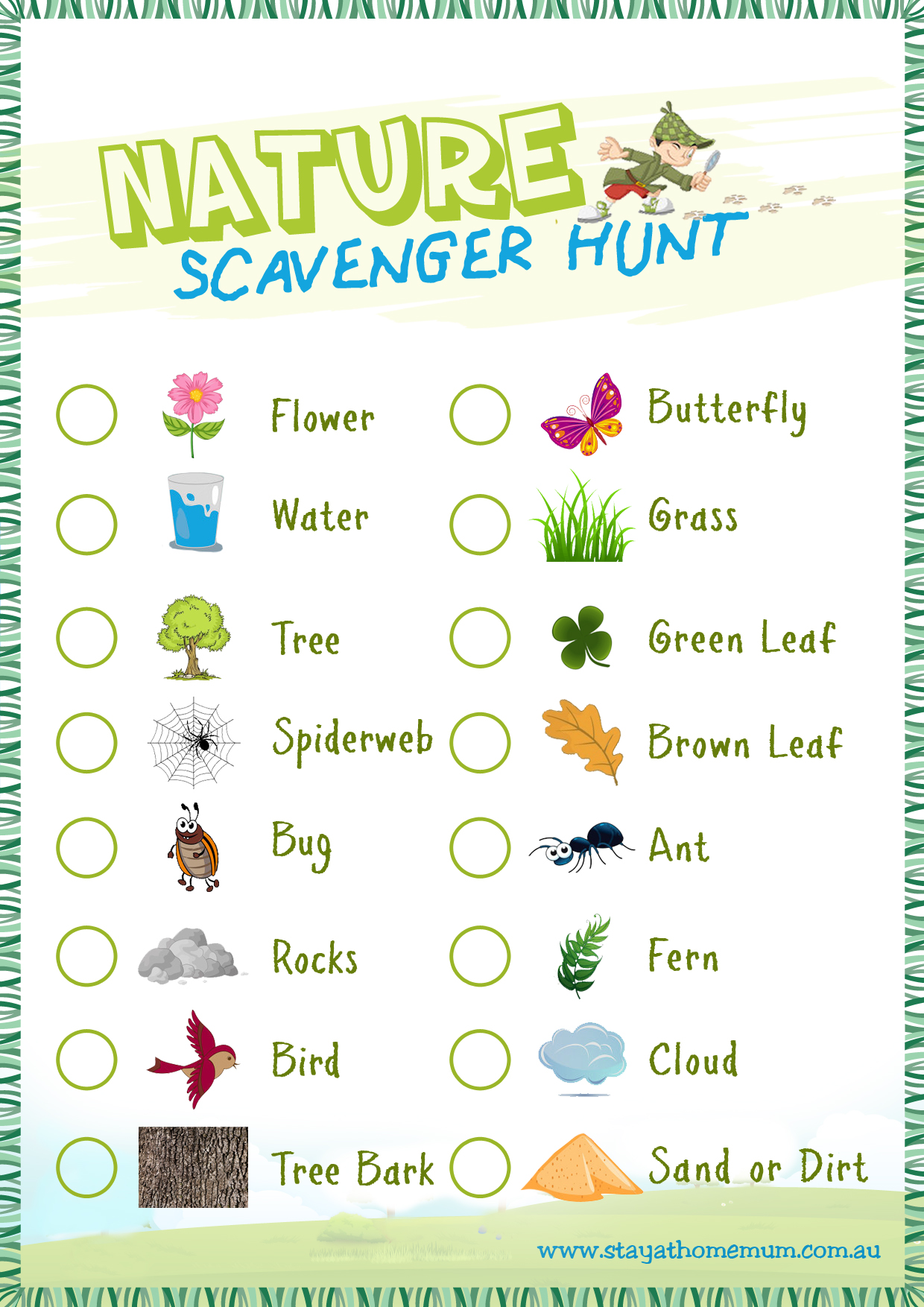
This free nature scavenger hunt printable is for those days.
Print the checklist, grab a pencil and head into the backyard, local park or neighbourhood for a simple outdoor activity that costs absolutely nothing. It is especially lovely during the spring school holidays when the flowers are blooming, the weather is warming up and there is a much better chance of spotting a butterfly that has agreed to participate.
It is also easy to add to a bigger day of school holiday activities in Australia without needing bookings, tickets or an impressive amount of organisation.
A Fun School Holiday Activity for The Whole Family: Nature Scavenger Hunt
- Download the Free Nature Scavenger Hunt Printable
- What Do the Kids Need to Find?
- How to Play the Nature Scavenger Hunt
- Where Can You Do a Nature Scavenger Hunt?
- Make It Easier for Younger Children
- Make It More Challenging for Older Kids
- Turn It Into a Full School Holiday Afternoon
- Keep the Scavenger Hunt Nature-Friendly
- What If the Weather Turns?
- An Easy Outdoor Activity That Costs Nothing

Download the Free Nature Scavenger Hunt Printable
Click the printable below to open the full-sized version.
On a computer, right-click the image and select Save image as. On a phone or tablet, press and hold the image to save it to your device.
For the clearest result, print it on A4 paper using the Fit to page setting.
You can print one checklist for each child or divide everyone into teams and share a copy.
A clipboard makes the sheet easier to carry, but a book or sturdy piece of cardboard underneath it works just as well. There is no need to buy special equipment for a five-year-old who will probably abandon the clipboard the moment they discover an interesting stick.
What Do the Kids Need to Find?
The printable challenges children to spot 16 things commonly found outdoors:
- A flower
- Water
- A tree
- A spiderweb
- A bug
- Rocks
- A bird
- Tree bark
- A butterfly
- Grass
- A green leaf
- A brown leaf
- An ant
- A fern
- A cloud
- Sand or dirt
Some objects will be much easier to find than others.
Grass and trees should be fairly cooperative. Butterflies, birds and bugs tend to have their own schedules and may refuse to appear simply because your child has a checklist.
Water could be a puddle, creek, pond, fountain or even rainwater sitting on a leaf. Sand or dirt could be found in the garden, at the beach or along a walking track.
The children do not have to collect the objects. They can simply point them out, tick the corresponding circle or take a photo.
This prevents everyone from returning home with seventeen rocks, half a garden and an ant that was apparently invited to live with you.
How to Play the Nature Scavenger Hunt
Before starting, choose a clear area where the children are allowed to explore.
This might be the backyard, a section of the local park or the area surrounding your picnic spot. Explain any boundaries before the children become excited and disappear into the nearest shrub.
Give each child or team a printable and a pencil, crayon or washable marker. Every time they spot one of the items, they can tick it off the list.
The activity does not have to be a race. You can:
- Set a 15 or 20-minute time limit
- Ask the children to find a certain number of objects
- Let them continue until they have completed the whole page
- Complete the hunt gradually across several family outings
- Take photographs of each discovery rather than ticking the sheet
A prize is not necessary, although the winner choosing the afternoon snack can generate a surprising amount of enthusiasm.
Where Can You Do a Nature Scavenger Hunt?
You do not need to visit a national park or trek deep into the bush to complete the hunt.
Try it:
- In your backyard
- At a local park
- During a family walk
- At the beach
- On a camping trip
- At a botanical garden
- Along an easy bushwalking track
- During a picnic
- At a playgroup gathering
- At a children’s birthday party
Not every location will contain all 16 objects, and that is completely fine.
Let the children circle anything they could not find and bring the printable along on your next outing. It can become an ongoing challenge rather than a frantic search for a fern when everyone is already overdue for lunch.
Make It Easier for Younger Children
Toddlers and preschoolers may need help understanding the pictures and identifying some of the objects.
Complete the hunt together and ask simple questions as you explore:
- What colour is the flower?
- Can you point to the biggest tree?
- Does the tree bark feel rough or smooth?
- Can you see an insect moving?
- How many rocks can you count?
- What shape is the cloud?
There is no need to complete the entire printable.
If your toddler finds a flower, points at a bird and then spends the remaining 25 minutes carrying around one very important stick, the outing has still been a success.
Make It More Challenging for Older Kids
Older children may finish the basic hunt quickly, so give them an extra mission.
They could photograph every object, write down where they found it or identify different types of trees, birds and insects.
You could also ask them to find:
- Something that smells nice
- Something rough
- Something smooth
- Something smaller than their thumb
- Something shaped like a circle
- Three different shades of green
- An object beginning with each letter of their name
- Something they have never noticed before
Children could also design a new checklist for another family member to complete.
For more variations, our guide to scavenger hunts for kids includes ideas for colour hunts, alphabet hunts, photo hunts and indoor scavenger hunts.
Turn It Into a Full School Holiday Afternoon
The scavenger hunt can be a quick backyard activity or part of a bigger family outing.
Pack a picnic, bring a ball and choose a park with plenty of space to explore. Once the checklist is complete, keep everyone moving with a few simple backyard games for kids.
You could also collect a few fallen leaves, twigs and seed pods to use in a picture or nature collage when you return home.
Just make sure the children understand the difference between collecting something that has already fallen and enthusiastically removing every flower from a public garden.
For families trying to fill the holidays without emptying the bank account, there are plenty more ideas in our list of 50 free school holiday activities for kids.
Keep the Scavenger Hunt Nature-Friendly
The aim is to look at nature, not dismantle it.
Encourage children to observe flowers, insects, spiderwebs and birds without touching or disturbing them. Flowers, bark and living leaves should remain where they are unless you know they can be safely and legally collected.
Children should never taste unfamiliar plants, berries or fungi. They should also avoid reaching inside holes, lifting heavy rocks or touching insects and animals they do not recognise.
Supervise younger children closely, particularly around roads, waterways and bushwalking tracks.
Bring drinking water, hats, sunscreen and suitable shoes when exploring beyond the backyard. It may be a free activity, but nobody wants the complimentary sunburn and blister package.
What If the Weather Turns?
Australian spring weather does enjoy changing its mind.
If rain arrives before you begin, save the printable for the next clear day and choose one of these indoor school holiday activities instead.
You can also adapt the idea into an indoor scavenger hunt by asking the children to find objects of different colours, shapes or textures around the house.
Just establish one important rule first: opening Mum’s drawers is not part of the game.
An Easy Outdoor Activity That Costs Nothing
This free nature scavenger hunt is ideal for school holidays, weekends, playdates or any afternoon when everyone needs to get out of the house before the walls start closing in.
There are no bookings to make, no supplies to order and no complicated instructions to follow.
Print the checklist, grab a pencil and head outside.
And should the children spend twenty minutes quietly searching for a butterfly while you finish your coffee, we will call that an additional educational benefit.
How many things did your kids manage to find?



This is exactly kind of content that builds better community